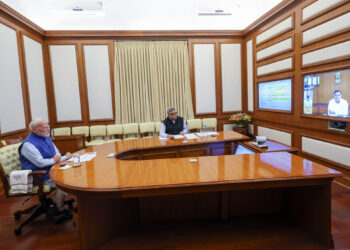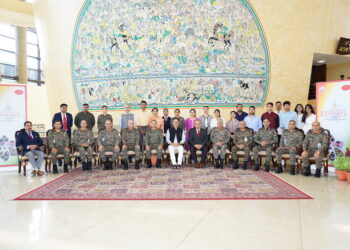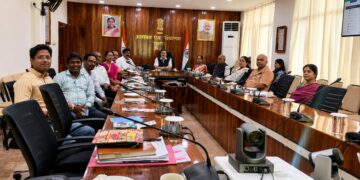

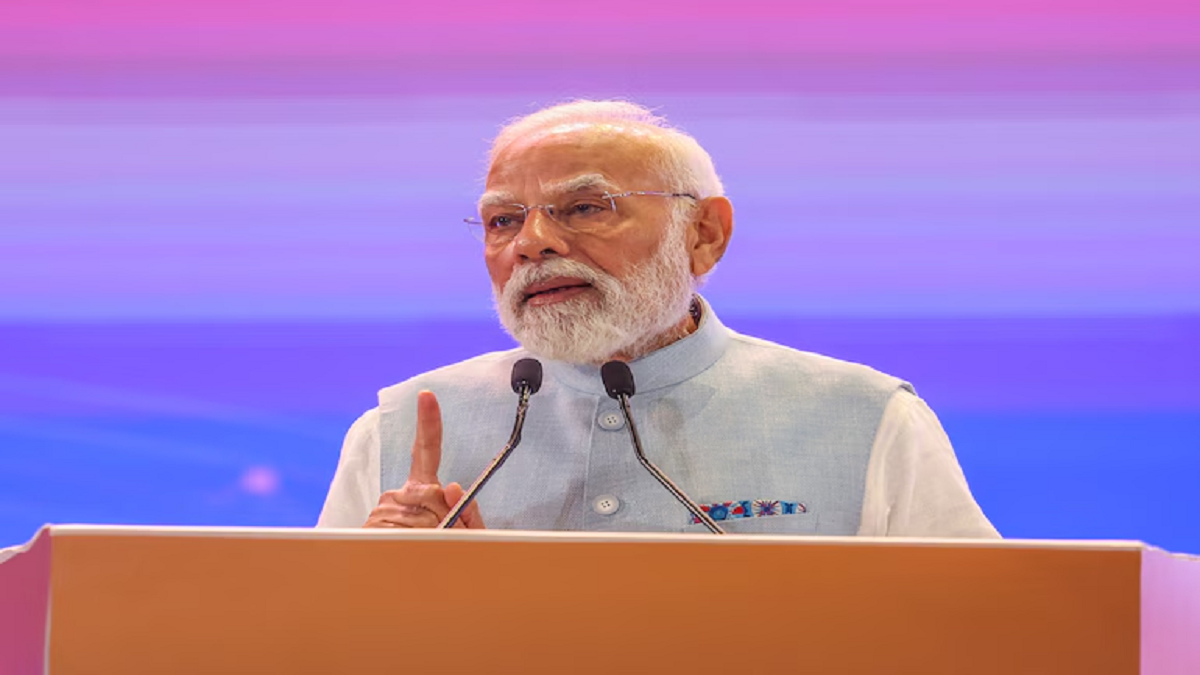
New Delhi, November 3, 2025: In a landmark address that set the tone for India’s next phase of scientific advancement, Prime Minister Narendra Modi today inaugurated the Emerging Science, Technology and Innovation Conclave (ESTIC) 2025 at Bharat Mandapam, New Delhi. The three-day event brings together global scientists, Nobel laureates, researchers, and industry leaders to deliberate on shaping India’s innovation future across eleven critical sectors — from quantum science and AI to biotechnology and space technology.
Marking a historic leap in India’s R&D landscape, the Prime Minister launched the ₹1 lakh crore Research, Development and Innovation (RDI) Scheme, aimed at creating a robust, private sector–driven ecosystem that nurtures high-risk, high-impact scientific projects. He said the initiative will help build a “modern innovation ecosystem focused on the ease of doing research”, ensuring that discoveries swiftly translate from labs to markets through reformed procurement, regulatory, and funding frameworks.
Shri Modi hailed the occasion as symbolic of India’s emergence as a pioneer of technology-led transformation, rather than merely a consumer of global innovation. “When science meets scale, when innovation becomes inclusive, and when technology drives transformation, the foundation for great achievements is laid,” he said, adding that India’s scientific community is leading breakthroughs in space exploration, quantum computing, green hydrogen, and bioeconomy.
The Prime Minister congratulated Indian scientists on the successful launch of the country’s heaviest communication satellite, praising their dedication and skill. He also celebrated the recent triumph of the Indian women’s cricket team in the ICC Women’s World Cup 2025, describing it as a moment of national pride that will inspire young innovators across the nation.
India’s Decade of Discovery
Highlighting India’s rapid rise in global innovation indices, Shri Modi noted that the nation’s R&D expenditure has doubled in the past decade, patent registrations have surged 17-fold, and India has become the world’s third-largest startup ecosystem. More than 6,000 deep-tech startups are currently driving solutions in clean energy, semiconductors, and advanced materials, he said, underscoring how research and enterprise are converging to fuel inclusive growth.
He emphasized that India’s Digital Public Infrastructure (DPI) has become a model for the world, empowering innovation at every level — from governance to agriculture. Over two lakh gram panchayats are now connected through optical fibre, and data accessibility has become a cornerstone of India’s development model.
Empowering Women in Science and Innovation
Calling inclusive innovation the true measure of progress, the Prime Minister celebrated the growing participation of Indian women in scientific research. “A decade ago, fewer than 100 patents were filed by women each year; today, that number exceeds 5,000,” he said. Women now constitute nearly 43 percent of all STEM enrolments — the highest globally. He added that women scientists have become icons of India’s space achievements, inspiring a generation of young girls to pursue science and engineering.
A Vision for the Next Generation
The Prime Minister highlighted the growing curiosity among children toward science and technology, recalling how Chandrayaan’s journey and recent space missions have captivated young minds. To nurture this scientific temperament, he announced the establishment of 25,000 new Atal Tinkering Labs, in addition to the existing 10,000 labs that already enable over one crore students to experiment and innovate.
Under the Prime Minister’s Research Fellowship (PMRF), 10,000 new fellowships will be awarded over the next five years to strengthen research capacity in universities. The government’s education reforms, he said, now allow STEM courses to be taught in local languages, ensuring wider access to scientific learning.
Ethical AI and Future-Ready Research
The Prime Minister reaffirmed India’s commitment to developing technology that is both inclusive and ethical. Citing Artificial Intelligence as a defining force of the era, he said India is investing over ₹10,000 crore under the India AI Mission, and leading the global conversation on human-centric AI governance. He announced that India will host the Global AI Summit 2026, a major step toward establishing international frameworks for safe, transparent, and innovation-friendly AI.
Calling for transformative thinking in emerging domains, Shri Modi urged scientists to focus on areas that can redefine the nation’s developmental priorities — from nutrition security and biofortified crops to clean energy storage, personalised medicine, and self-reliance in critical inputs. He expressed confidence that India’s scientific community will not only answer these questions but also pioneer new frontiers of discovery.
The Prime Minister concluded with an appeal for collective commitment to research excellence, innovation-led growth, and ethical science, invoking the spirit of “Jai Vigyan, Jai Anusandhan.”
Union Minister Dr. Jitendra Singh, Principal Scientific Adviser Prof. Ajay Kumar Sood, Nobel Laureate Sir Andre Geim, and senior officials from the scientific community were present at the inaugural session.
Source: Press Information Bureau (PIB) – Prime Minister’s Office