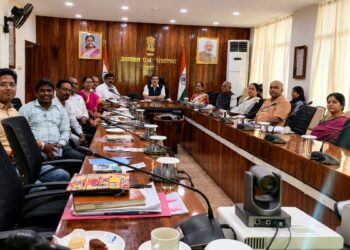

Kochi / New Delhi, October 31, 2025: India’s marine fisheries sector has entered a transformative era with the formal launch of the Marine Fisheries Census 2025 (MFC 2025) — the country’s first fully digital and geo-referenced enumeration of fisher households and marine infrastructure. The initiative was inaugurated in Kochi by Union Minister of State for Fisheries, Animal Husbandry and Dairying, Shri George Kurian, marking a milestone in the digital evolution of fisheries governance.
At the launch event, the Minister unveiled a suite of advanced mobile applications under the VyAS (Virtual Yojana Analysis System) platform — including VyAS–BHARAT, VyAS–NAV, and VyAS–SUTRA — that will enable real-time, paperless data collection and monitoring across India’s coastal states and Union Territories. The new system represents a complete departure from the manual census methods used in earlier editions, setting a global benchmark for data-driven and transparent fisheries management.
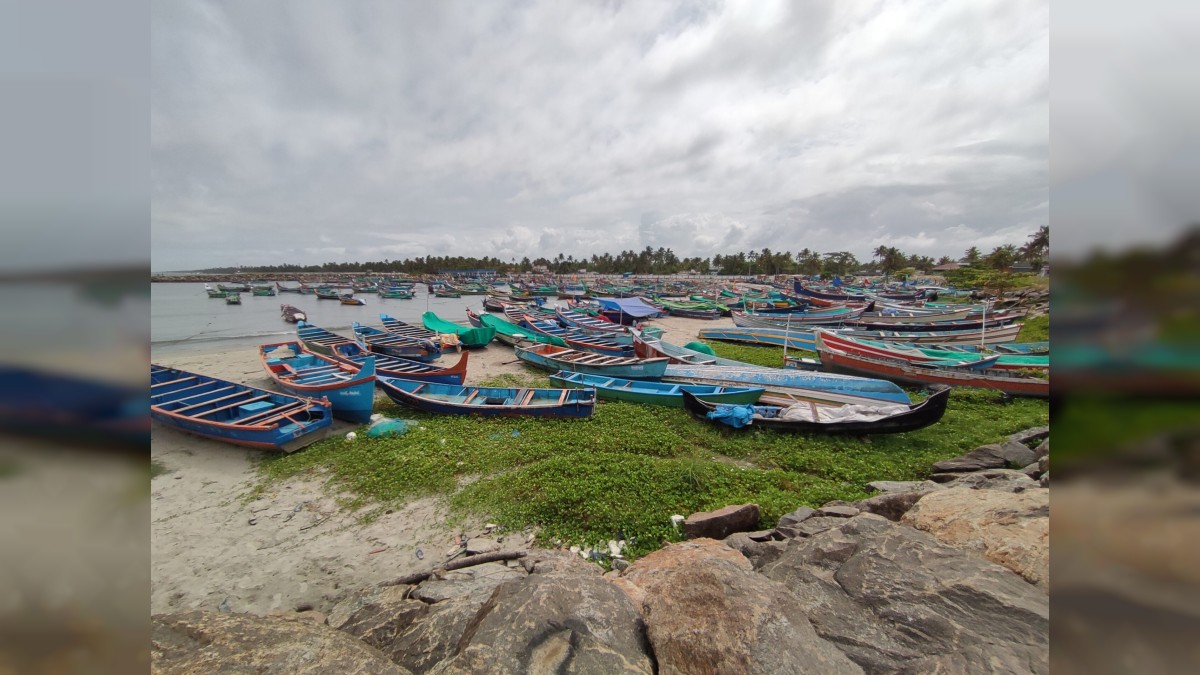
The 2025 census will cover approximately 1.2 million fisher households spread across 5,000 coastal villages and habitations in 13 maritime States and Union Territories, including the Andaman & Nicobar Islands and Lakshadweep. Data collection will take place over a 45-day period from November 3 to December 18, 2025, through multilingual Android-based applications developed by the ICAR–Central Marine Fisheries Research Institute (CMFRI), which is the nodal agency for the exercise.
Shri George Kurian urged fishermen and fish farmers to register on the National Fisheries Development Portal (NFDP) to avail themselves of welfare benefits, adding that technology is fast becoming the key enabler for modernization in India’s fisheries sector. He also highlighted the government’s initiative to provide transponders, turtle-excluder devices, and other scientific instruments free of cost to enhance safety and sustainability in marine operations.
The MFC 2025 represents not just a digital leap but a comprehensive reform in how fisheries data is gathered and utilized. The entire system is supported by multi-tier dashboards for supervisory oversight, ensuring data integrity, accuracy, and accountability. Each record will be geo-tagged, allowing policymakers to visualize spatial patterns of fishing activity, infrastructure, and household welfare in unprecedented detail.
An important feature of the 2025 census is the integration of drone technology for aerial enumeration of fishing crafts during trawl ban periods. Drones will survey major harbours on both coasts — including Vizag, Kakinada, Tuticorin, Mangaluru, Beypore, and Puthiyappa — offering a verifiable digital record that complements ground-level data.
Beyond enumeration, the census seeks to generate a granular socio-economic profile of India’s coastal population. It will capture insights on household income, credit access, liabilities, insurance coverage, disabilities, and pandemic-related impacts, ensuring that welfare measures under schemes such as PM Matsya Sampada Yojana (PMMSY) and PM Matsyakaar Samridhi Sah-Yojana (PM-MKSSY) reach those most in need.
For the first time, institutional mapping of Fish Farmer Producer Organizations (FFPOs) and Self-Help Groups (SHGs) has been included, strengthening collective enterprise and value chain participation.
The census, jointly implemented by the Department of Fisheries and Fishery Survey of India (FSI), is the fifth national edition since the initiative began. Operating under the banner “Smart Census, Smarter Fisheries,” it aims to serve as the evidentiary backbone for climate-resilient, inclusive, and welfare-oriented fisheries planning.
Officials emphasized that the Marine Fisheries Census 2025 will enable targeted infrastructure development, optimize welfare delivery, and promote community-led entrepreneurship — particularly among women and youth in coastal and island ecosystems.
As India’s marine sector embraces technology at scale, this census marks a turning point — transforming data into a powerful instrument for sustainability, equity, and economic growth.
Source: Press Information Bureau (PIB) – Ministry of Fisheries, Animal Husbandry & Dairying