
By Archana Devi Raj
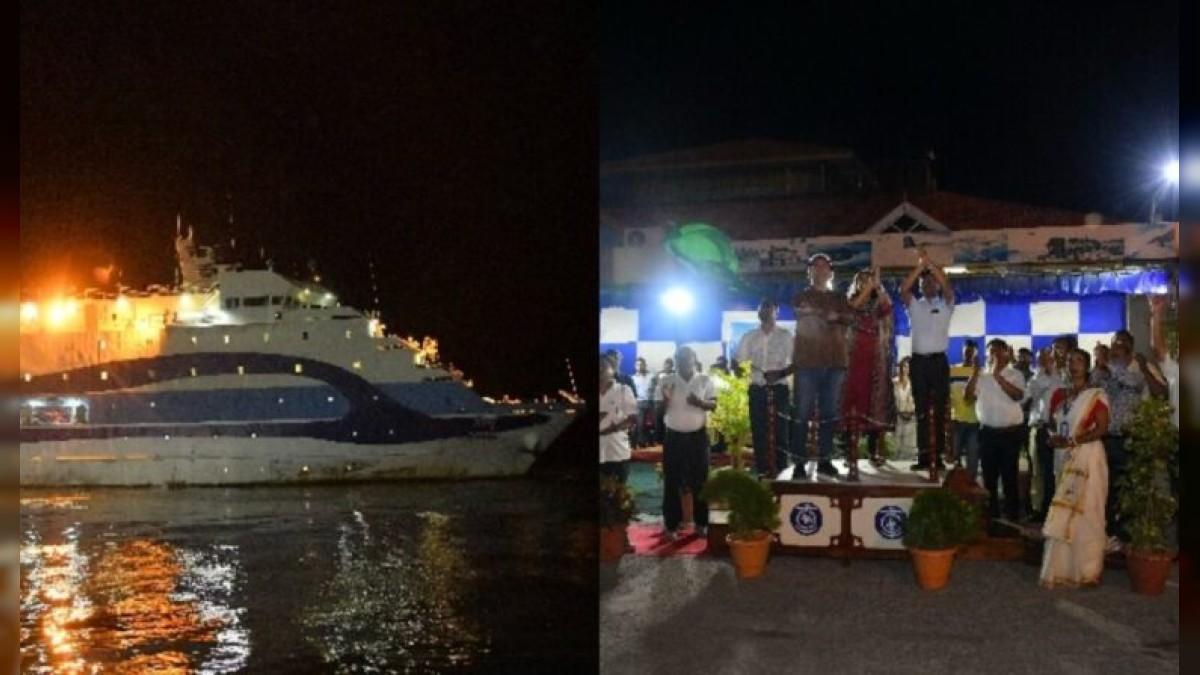
Sri Vijay Puram (Port Blair): It was a night unlike any other as the DSS vessel MV Sindhu slipped out of Haddo Wharf (Port Blair Harbour) under a starry sky, carrying over 400 excited passengers — students, teachers, scientists, and nature enthusiasts — on a special voyage to witness Barren Island volcano, the Indian subcontinent’s lone active volcano, located about 138 km northeast of Port Blair .
The anticipation was palpable as the ship sailed northeast through the calm waters of the Andaman Sea. The Sindhu left the capital city around 8.30 p.m. on Friday, Oct 24, cutting through gentle waves as the moon cast a silvery trail on the sea. Onboard experts briefed the passengers about the significance of the voyage. “Barren Island is a living laboratory,” said one of them. “It lies at the junction where the Indian tectonic plate plunges beneath the Burma plate — a process that not only causes earthquakes in the region but also fuels volcanic activity.”
At the helm on the occasion was our very own Captain of the ship-Rohit Lal, calm, composed, and confident man steering us into history! He ensured everything was shipshape on board.
The volcano has a long history of eruptions, the earliest recorded in 1787. It has since erupted repeatedly — in 1991, 1994-95, 2005, 2018 and intermittently in recent years — each time reminding the world that the Andaman region sits atop one of the planet’s most restless geological zones.
A spectacle of Fire and Sea: Well after the midnight, a faint silhouette emerged against the horizon. As the vessel drew closer, an orange glow began to pulse from within the dark cone of the volcano. Suddenly, a fiery jet burst through the crater, sending tongues of lava cascading down the slopes. The deck erupted in gasps and applause. Cameras clicked, and many simply stood speechless. “It was like the Earth was breathing fire,” said a college student from Port Blair. The sea turned red where lava met water — it was both awe inspiring and beautiful.
The Captain slowed the ship to maintain a safe viewing distance as passengers crowded the rails. The low, thunderous rumble of the volcano rolled across the sea, mingling with the hiss of waves meeting molten rock. “The entire scene felt alive — glowing lava, rising steam, and the rhythmic heartbeat of the planet beneath us,” said, one of the onboard guests.
Science behind the Spectacle: Experts onboard explained that the eruptions were a visible outcome of the immense tectonic pressures deep beneath the Andaman Basin. As the Indian plate subducts under the Burma plate, the friction and melting generate magma that seeks an outlet — Barren Island being one of them. “Every tremor and eruption here tells us something about how the Earth’s crust behaves,” a Science Teacher observed. “It’s also why Andaman occasionally experiences mild earthquakes. Barren is a direct window into those dynamic processes” he added.
Life amidst Desolation: Despite its name, Barren Island is not entirely lifeless. Its steep basaltic slopes may appear inhospitable, but life continues to reclaim the island after each eruption. Birds are often sighted, and marine ecosystems flourish in the surrounding coral-rich waters enriched by volcanic minerals. “From destruction comes renewal — the marine life here is incredibly vibrant,” remarked an official, watching the distant glow fade as dawn neared.
A Voyage to Remember: As the first light of the day washed over the horizon, the fiery glow of Barren Island dimmed to a column of pale ash. Many passengers had stayed awake through the night, unwilling to miss even a moment of the spectacle. A number of co-passengers this Reporter spoke to gave variety of reactions. The students found it an incredible experience to see a volcano so close. The entire journey, they said, has been a great learning experience for them which will ever remain etched in their memories. A high-school student from Middle Andaman, summed up the collective sentiment: “It felt like watching the Earth being born again. I’ll never forget that sight.”
There were numerous other reactions coming in from passengers from different walks of life, ranging from amazement, bewilderment, awe and admiration. Everyone termed it once in a life time experience.
By the time MV Sindhu turned back toward Port Blair the next morning, the air on deck was filled with animated chatter, awe, and quiet reflection. For the 400-plus voyagers, the experience was more than an excursion — it was a rare encounter with the raw forces that shape the planet.
Earlier just before the cruise began, Island’s Chief Secretary Dr Chandra Bhushan set the sail rolling at the Haddo Wharf with inspiring words about the arrangement and described it as a proud moment for the Andaman & Nicobar Islands.