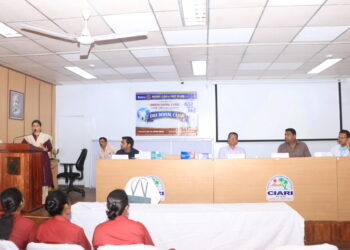

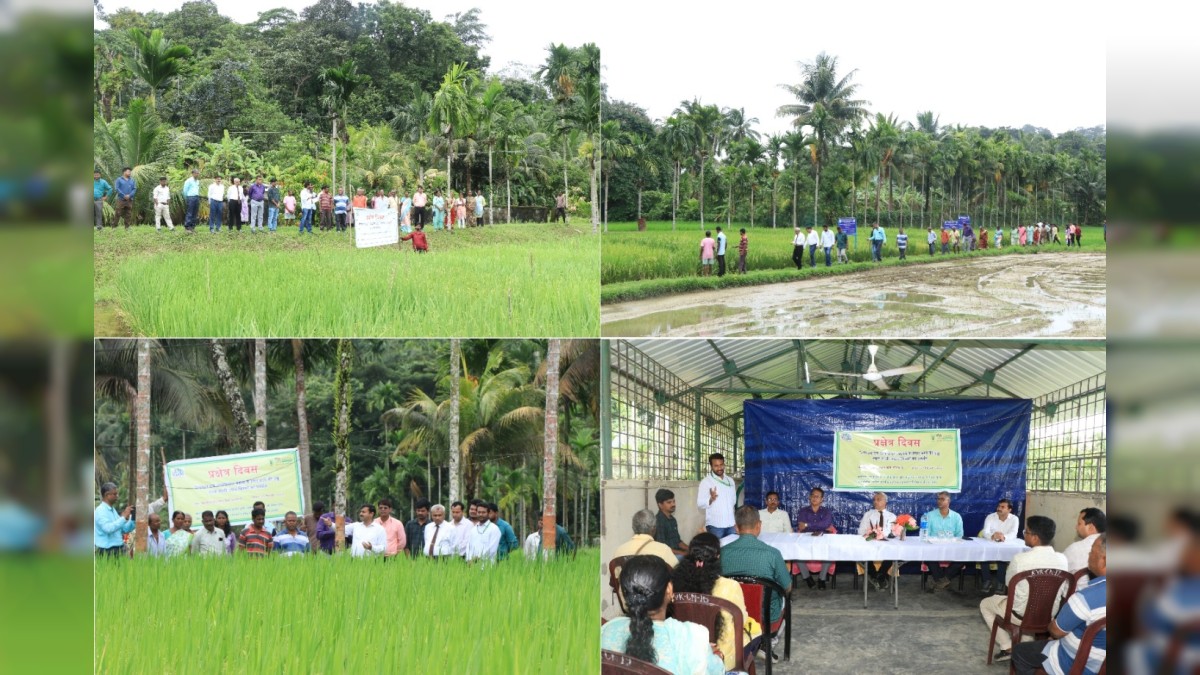
Port Blair, Sept. 24: For rice farmers of the Andaman & Nicobar Islands, the difference between a good harvest and a failed one can often come down to timing. This message was at the heart of a Field Day on “Demonstration of Rice Growth and Yield under Different Transplanting Dates”, organised by the Division of Natural Resource Management, ICAR–Central Island Agricultural Research Institute (CIARI), at the Bloomsdale Research Farm, Chouldari.
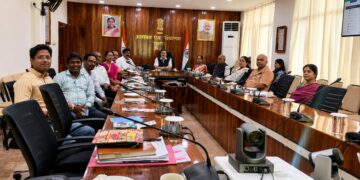
The programme, held under the guidance of Dr. Eaknath B. Chakurkar, Director, ICAR-CIARI, brought together scientists, agriculture officials, and about 30 farmers from Chouldari, Tushnabar, and nearby villages. The event aimed to bridge scientific research with local farming practices by showing, in real field conditions, how transplanting dates directly affect crop growth, resilience, and yield.
Addressing the farmers, Dr. Chakurkar underscored that timely transplanting is particularly critical in the islands — not due to drought, but because of excess rainfall that can trigger waterlogging, delayed maturity, and higher pest and disease incidence. He urged cultivators to adopt climate-smart, location-specific practices that CIARI