
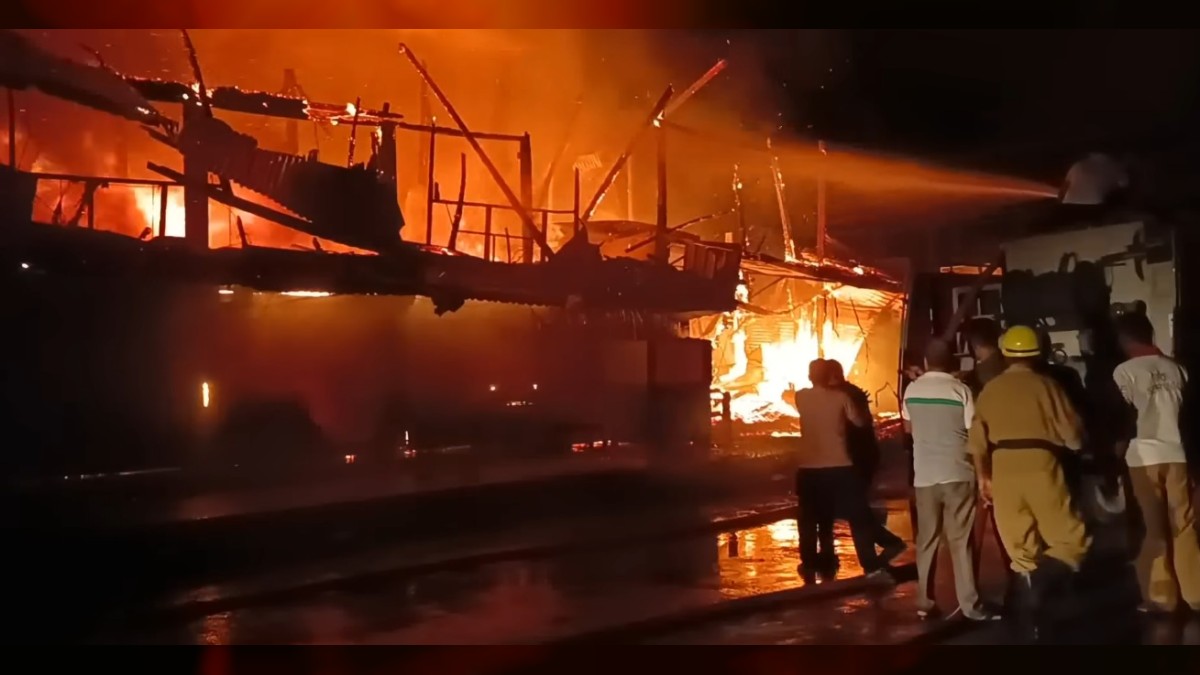
Rangat, Oct. 26: A devastating fire tore through the old wooden market of Rangat Bazar in the early hours of Saturday, reducing 18 commercial establishments to ashes and partially damaging three houses and a temple building. The blaze, which broke out around 1 a.m. near the Atal Bihari Vajpayee Auditorium and Murugan Temple, raged for over five hours before being brought under control at dawn.
While no casualties were reported, the inferno gutted shops packed with goods and merchandise, leaving behind a charred skeleton of what was once the town’s busiest market hub.
Swift response, yet stark lessons: Deputy Commissioner Sushant Padha of North & Middle Andaman rushed to the site with senior officials to oversee the firefighting and relief operations. A Damage Assessment Committee has been formed, and an inquiry is underway to determine the cause of the fire. The DC assured affected families of “immediate and concrete relief measures,” including early compensation and rehabilitation support.
Fire personnel, assisted by police teams, revenue officials, and volunteers, worked tirelessly through the night to prevent the flames from spreading to adjoining structures. The effort was bolstered by private water tankers and excavators provided by the National Highway authorities. “The public response was remarkable,” said a fire official at the scene. “Without local support, the loss could have been far greater.”
A wake-up call for preparedness: The incident has reignited calls for a comprehensive fire safety plan for island townships, where congested wooden markets, narrow lanes, and limited firefighting infrastructure pose serious risks.
Experts note that most traditional market buildings in Andaman’s smaller towns still lack basic safeguards — such as fire alarms, hydrant systems, and emergency exits. “We’ve been lucky this time that no lives were lost,” remarked a local shopkeeper. “But unless safety upgrades are made, the next fire might not spare lives.”
The Way Forward: The administration has vowed to tighten fire safety protocols, conduct inspections of vulnerable structures, and sensitize market associations to maintain preventive equipment.
As relief operations continue, the Rangat blaze stands as a stark reminder that disaster preparedness is not optional — especially in isolated island communities where response time can mean the difference between a scare and a catastrophe.