
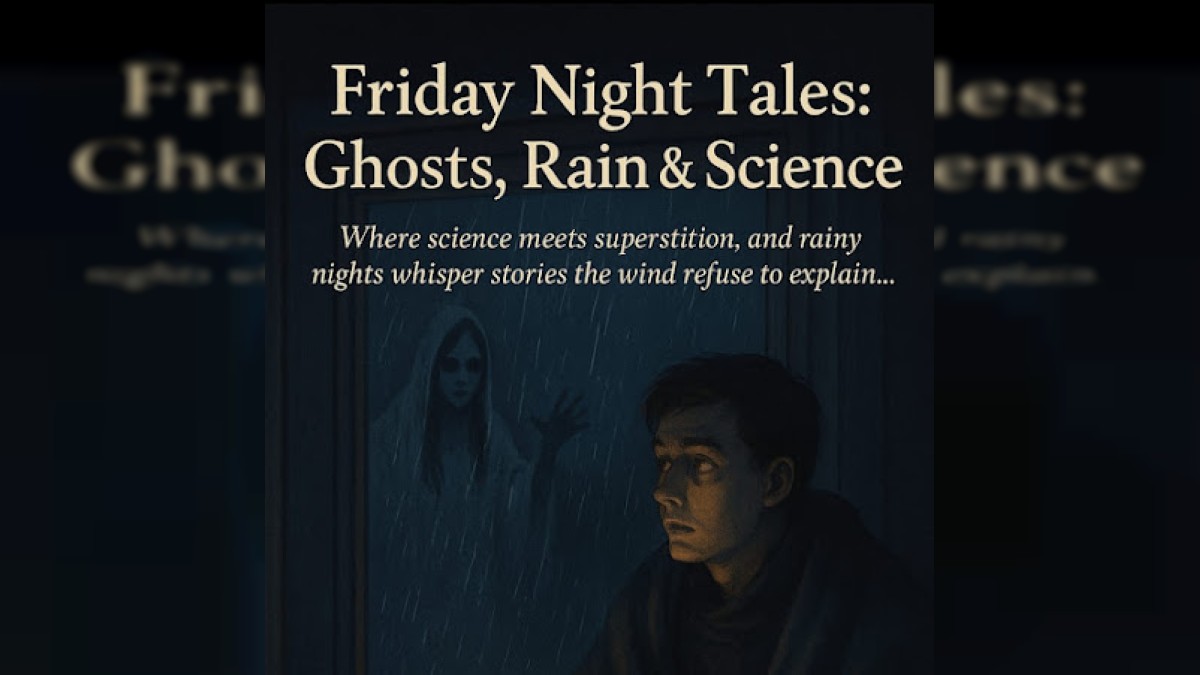
Where science meets superstition, and rainy nights whisper stories the wind refuse to explain…
By Chanchal Singha Roy
The last few days have been drenched in endless rain—power cuts, flooded roads, restless seas. Life feels dull, almost suspended. Yet, on nights like these—wrapped in a blanket with the wind howling and raindrops hammering the roof—I’m pulled back to my childhood, when such evenings were perfect for ghost stories.
India has always been a land of spirits. From ancient forts and deserted rajmahals to lonely village fields and overgrown graveyards, every place seems to hold its own tale. My grandmother once narrated how an entire village was abandoned because of a single troublesome ghost. Customs, too, reflected these fears: carrying iron while transporting fish to keep away “non-vegetarian ghosts,” or telling women not to step out at night with loose hair—lest a wandering spirit follow them home.
Books, TV serials, and folklore only deepened this fascination. In the 1960s and 70s, ghost stories were everywhere in Indian literature, while Vikram aur Betal on Doordarshan became a childhood staple. Among my relatives, one uncle was famous as a “ready-made storyteller,” spinning eerie tales with such conviction that we could almost feel the cold air brush past us.
And then came my own “ghostly encounter.”
Behind our government quarters stood a banana plantation. Friends whispered about a woman in white wandering there at night. One full-moon evening, curiosity won—I peeped out of the bathroom window. My throat went dry, my legs shook. There it was—a figure bowing, waving in silence. My heart raced. For a brief, terrifying moment, I believed. Then came the truth: it was nothing but banana leaves glistening with rain, swaying like ghostly hands in the silver light. My first and last “ghost sighting.”
Years later, when I became a teacher, I discovered my students carried the same hunger for such mysteries. During rainy days, ghost stories became the most requested classroom entertainment. They spoke of strange lights hovering over fields or the sea—always whispered about as spirits. I smiled and explained the science: bioluminescence from plankton, glowing fish, or the phosphorus in decaying plants.
But, unfortunately even today, in parts of rural India, belief in ghosts and black magic continues to shape lives. Cases of “ghost treatment” through rituals, often targeting women, still emerge—where unexplained illness or distress is attributed to spirits rather than medical reasons. Such practices, rooted in age-old fear, show how deep and enduring the cultural grip of ghost lore remains.
Education and awareness , only the last hope to replace such fear and stigma. Science teaching us that nature’s mysteries can be just as magical as ghost tales.
Ghosts may or may not exist. But the stories—half fear, half fascination—will always remain stitched into our culture, like shadows in moonlight, refusing to fade. Some tales can be explained by science, but others resist every explanation—remaining mysterious, without conclusion, and that is what keeps the allure of ghost stories alive.
Perhaps that’s why rainy nights will always carry a special charm for me. Between science and superstition, ghosts and glowing plankton, fear and fascination—I find myself listening again, just like that child under the blanket, waiting for another story.
And who knows? The next shadow outside your window might just be banana leaves in the wind… or maybe not!